
The short answer
We install custom and stock wallpaper murals in Plantation homes. Getting exact wall dimensions before ordering, preparing a smooth primed surface and aligning each panel to the image are the steps that make a mural look like one piece.
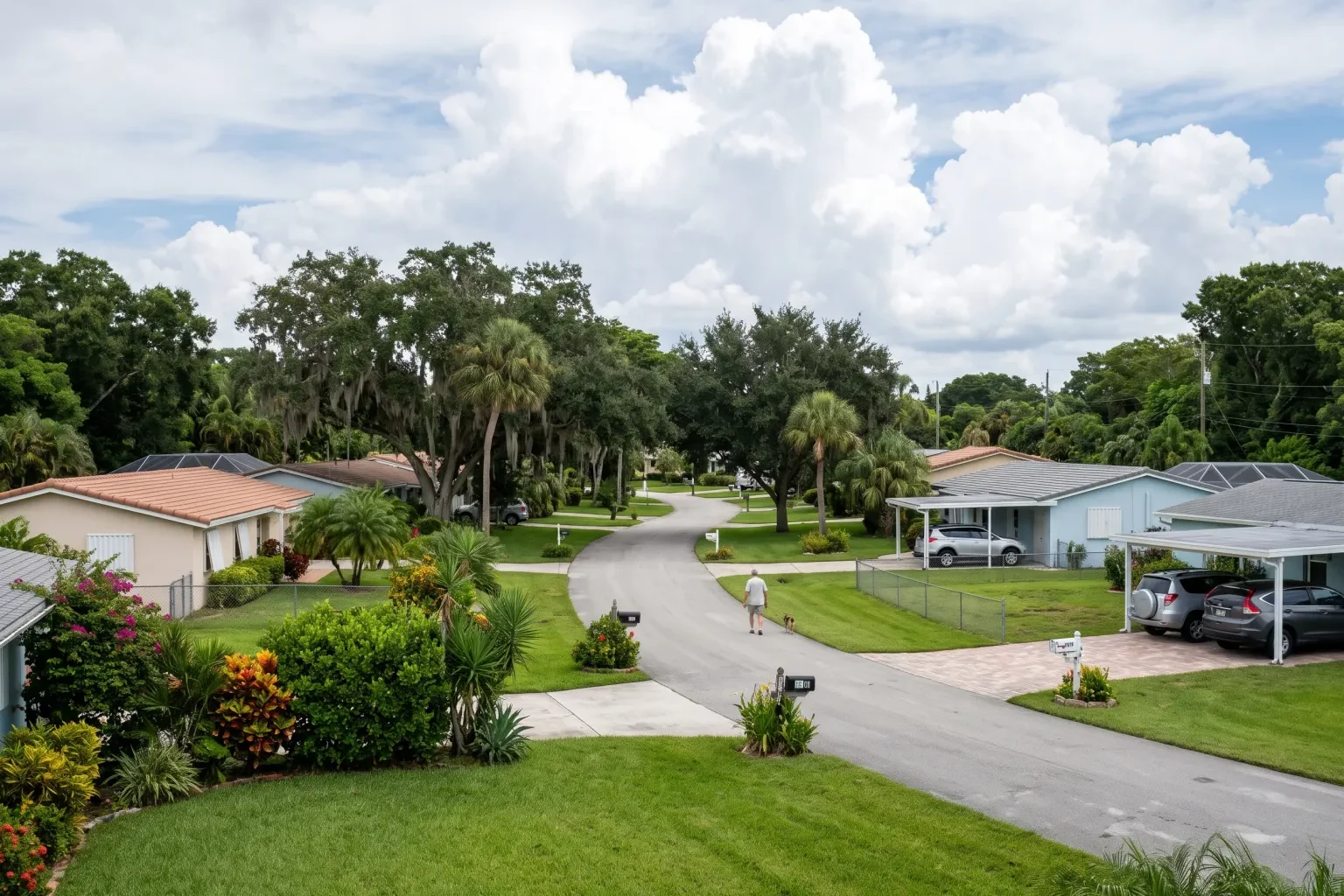
A printed mural lets you put a full scene on a wall: a misty forest in a home office, an oversized floral behind a dining table, a soft sky in a nursery, or a vintage-style map in a teen's room. In Plantation, where houses often have wide walls and generous ceiling heights, murals have room to breathe. We drive about eight miles west from Fort Lauderdale to install them across ZIPs 33317, 33322, 33324 and 33388. The work is part measuring, part wall preparation and part patience, because a mural is one continuous image split into strips that must meet with no visible step.
Three ways people use murals here
Over many projects we have noticed that mural requests in suburban Broward homes fall into a few groups, and each one has its own planning needs.
- Statement wall in a great room or dining area: large scale, needs careful centering on furniture
- Children's rooms and nurseries: playful scenes placed so key elements sit above crib or bed height
- Home offices: calm landscapes or textures that look good behind you on video calls
- Hallway end walls: scenic views that add depth to long corridors in split-plan homes
Sizing the order correctly
Custom murals are printed to your measurements, so a mistake at this stage cannot be fixed by the installer later. We take width readings at several heights and height readings at both ends and the middle, then add the bleed the manufacturer recommends. Plantation homes with tall walls sometimes have a step in the ceiling, a soffit over a kitchen pass-through, or crown molding that varies slightly along its length, and all of that changes where the image will be cropped.
We also map obstacles: switches, outlets, vents, a thermostat or a doorway. Sliding the image a few inches before printing keeps faces, horizons and focal points clear of them. If the mural has a strong horizon line, we decide together at what height it should sit relative to furniture.
Substrates and the South Florida climate
Non-woven murals are our default suggestion. They stay dimensionally stable when humidity changes, they can be hung by pasting the wall, and they usually strip off cleanly when you want a change. Vinyl-coated murals are tougher and washable, which suits kids' rooms and family spaces. Self-adhesive murals are the most convenient to buy, but in a warm room or on a textured wall, edges can start lifting.
Inland homes like those in Plantation still go through months of high humidity from May to October. If the power goes out during a summer storm and the house heats up, a stable substrate is far less likely to open at the seams afterward.
How the installation unfolds
The wall is repaired and sanded, any spray texture is skimmed smooth, and a white wallcovering primer goes on so earlier paint colors do not tint pale areas of the image. Then we lay out the panels on the floor in order, check the numbering against the maker's diagram and confirm the overlap or butt-joint method.
The first panel goes up against a plumb line. Every panel after that is aligned to the image itself, checking at eye level, at the ceiling and near the floor. Excess is trimmed at the end, never before, so small adjustments remain possible.
Seams on a mural deserve special attention because a hairline gap shows up as a thin white line through the image. We press each seam with a seam roller, check it again after a few minutes as the paste settles, and correct any panel that has crept before the adhesive grabs. Panels are smoothed from the center outward to push out air, and any paste on the printed face is lifted right away with a clean, slightly damp sponge.
Care after the mural is up
Give the adhesive a few days in a steadily air-conditioned room. Dust the surface gently, and clean washable murals with a soft damp cloth. Store any spare panel flat indoors. Nearby, we also hang murals in Sunrise, Lauderhill, Lauderdale Lakes, Tamarac and North Lauderdale.
More services in Plantation
- Wallpaper Installation in PlantationLocal service & repairs
- Wallpaper Removal in PlantationLocal service & repairs
- Accent Wall Installation in PlantationLocal service & repairs
- Grasscloth Wallpaper Installation in PlantationLocal service & repairs