
The short answer
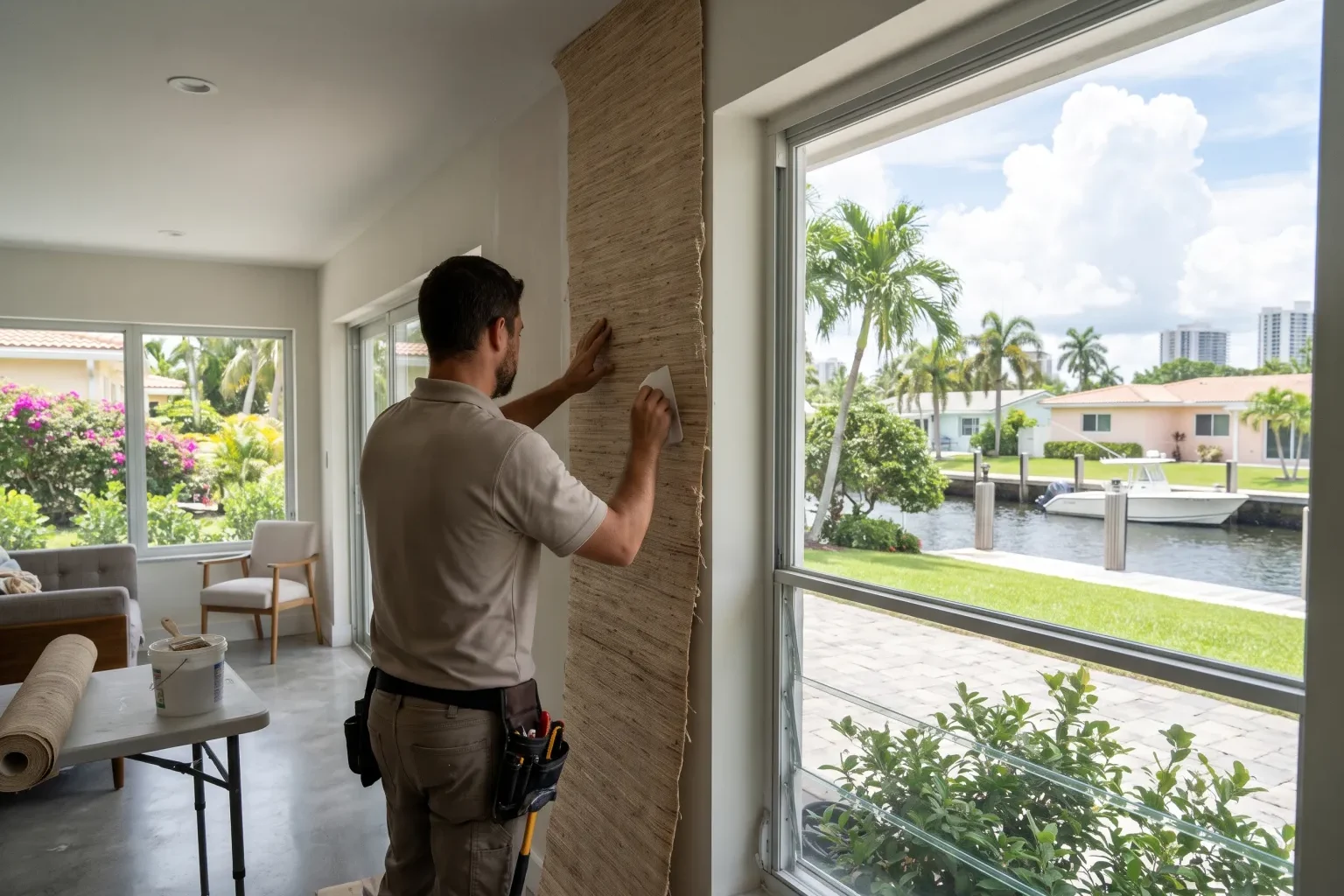
Grasscloth suits low-traffic rooms like bedrooms, dining rooms, offices and accent walls, where its woven texture can be seen and touched without heavy wear. We seal and prime the walls with a pigmented primer, hang panels in sequence from the same dye lot, and trim with fresh blades so the fibers do not fray.
Grasscloth is woven from plant fibers such as sisal, jute, arrowroot and seagrass, then laminated onto a paper backing. It brings a soft, hand-made texture to a room that no printed paper can copy, and it rewards a careful hanger while punishing a rushed one. True Wallpaper Installation hangs natural-fiber wallcoverings in homes across Fort Lauderdale and the surrounding Broward County cities. This page explains where grasscloth earns its place, how the walls get ready for it, what the hanging process looks like from the first measurement to the last trim cut, which factors move the cost of a project up or down, and how to keep the fibers looking good in a climate that is warm and damp for much of the year.
Rooms Where Grasscloth Makes Sense
Natural fiber looks its best in spaces that stay calm. A primary bedroom, a formal dining room, a home office or a living room feature wall all let the weave read as a quiet backdrop. Because the material is porous, it is a poor match for a shower wall, a kitchen backsplash or a powder room sink area where water splashes daily. Hands and pet noses also leave marks, so we usually steer families with young children away from hallways at shoulder height.
In South Florida, light is a second consideration. Strong afternoon sun through west-facing sliding doors will slowly fade most natural dyes, and the change is uneven where furniture shades part of the wall. If a room gets hours of direct sun, we talk about window film, sheer drapery or a lighter, undyed fiber that ages more gracefully. Coastal condos with salt air and constant air conditioning are fine for grasscloth as long as the unit keeps a steady indoor humidity and the walls are not near a leaking slider.
- Good fits: bedrooms, dining rooms, studies, ceilings in dry rooms, entry accent walls
- Use caution: sunny rooms, rentals with pets, narrow halls
- Avoid: full bathrooms, laundry rooms, kitchens near the range or sink
Getting the Walls Ready
Grasscloth is translucent in a way many owners do not expect. Any patch, joint compound mark or color change on the wall can shadow through the weave, especially on lighter fibers. That is why preparation takes as long as hanging on many grasscloth jobs. We start by checking the wall with a work light held flat against the surface, which exposes dents, nail pops and ridges that look invisible in normal room light.
Holes and cracks are filled and sanded smooth. On concrete-block exterior walls, which are common in Fort Lauderdale ranch homes, we look for efflorescence, a chalky mineral bloom that signals moisture moving through the masonry. Paste will not hold well over it, so the source has to be addressed first. Glossy paint gets a light scuff, and walls that were once covered in old paper are checked for leftover adhesive that could react with fresh paste.
Next comes a wallcovering primer. For grasscloth we prefer a pigmented primer tinted close to the color of the backing, so the hairline gaps between fibers show a matching tone instead of bright white drywall. The primer also lets the paste grab evenly and makes the paper easier to strip years from now.
How We Hang It, Step by Step
Every grasscloth job follows the same order, because skipping a step shows up in the finished wall.
- Measure and plan: we measure each wall, note windows and outlets, and decide where the first panel lands so the most visible seam falls in a natural spot rather than the center of a focal wall.
- Check the rolls: all rolls should share one dye lot. We unroll a few feet of each and compare them in daylight, then number them so color shifts stay gradual around the room.
- Reverse or sequence panels: many grasscloths look better when every other panel is reversed top to bottom, which softens shading at the edges. We follow the manufacturer's direction on this.
- Paste: we use a clear, heavy-duty clay or premixed adhesive applied evenly to the back. Too much paste soaks through and stains the fibers, so we keep it thin and consistent.
- Book and relax: pasted panels are folded onto themselves and rested for the time the maker specifies so the backing expands before it goes on the wall.
- Hang and smooth: each panel is set to a plumb line and pressed with a soft brush or felt smoother, never a hard plastic tool that crushes fibers.
- Seams: grasscloth seams are visible by nature. Pattern matching is not possible with random natural weaves, so the goal is tight, straight butt joints with no overlap and no paste on the face.
- Trim: edges at ceilings, baseboards and casings are cut with a straightedge and a new blade every few cuts, because a dull blade pulls strands loose.
What Changes the Cost
We quote each grasscloth room after seeing it, because the same square footage can involve very different amounts of labor. The main drivers are listed below.
Ceiling height matters more than many people expect. Panels over nine feet are heavier when pasted and need scaffolding or a second set of hands, and stairwells add another layer of setup.
- Wall condition: smooth, primed drywall is quick; textured walls may need skim coating so the weave does not show bumps underneath.
- Material type: thin arrowroot and delicate silk-backed weaves handle more slowly than sturdy sisal or vinyl-faced faux grasscloth.
- Pattern repeat and layout: random weaves need no match, but printed or striped grasscloth with a set repeat uses more material and time to line up.
- Room size and obstacles: many windows, built-ins, outlets and arches mean more relief cuts and more trimming.
- Access: furnished rooms, tall ceilings and stair walls need extra protection and equipment.
Caring for Grasscloth After Installation
Natural fiber does not like water. Dust the walls every few months with a soft brush attachment on a vacuum, working top to bottom. For a fresh spot, blot gently with a dry white cloth; rubbing pushes dirt deeper into the weave. Most stains on true grasscloth cannot be washed out, so a spare panel or two from the original order is worth keeping in a closet for repairs.
Keep indoor humidity steady. During the wet months from May through October, a well-running AC system protects the paste line and keeps the fibers from swelling. If the power goes out for days during hurricane season, open the room up once it is safe and dry it out quickly when cooling returns. Watch for loose edges near exterior doors, and call us early if a seam lifts, because a small re-paste is easier than replacing a panel.
Grasscloth Wallpaper Installation by city
- Grasscloth Wallpaper Installation in Wilton ManorsLocal service & repairs
- Grasscloth Wallpaper Installation in Oakland ParkLocal service & repairs
- Grasscloth Wallpaper Installation in Lauderdale-by-the-SeaLocal service & repairs
- Grasscloth Wallpaper Installation in Lauderdale LakesLocal service & repairs
- Grasscloth Wallpaper Installation in LauderhillLocal service & repairs
- Grasscloth Wallpaper Installation in Dania BeachLocal service & repairs
- Grasscloth Wallpaper Installation in Pompano BeachLocal service & repairs
- Grasscloth Wallpaper Installation in North LauderdaleLocal service & repairs
- Grasscloth Wallpaper Installation in PlantationLocal service & repairs
- Grasscloth Wallpaper Installation in SunriseLocal service & repairs
- Grasscloth Wallpaper Installation in HollywoodLocal service & repairs
- Grasscloth Wallpaper Installation in TamaracLocal service & repairs